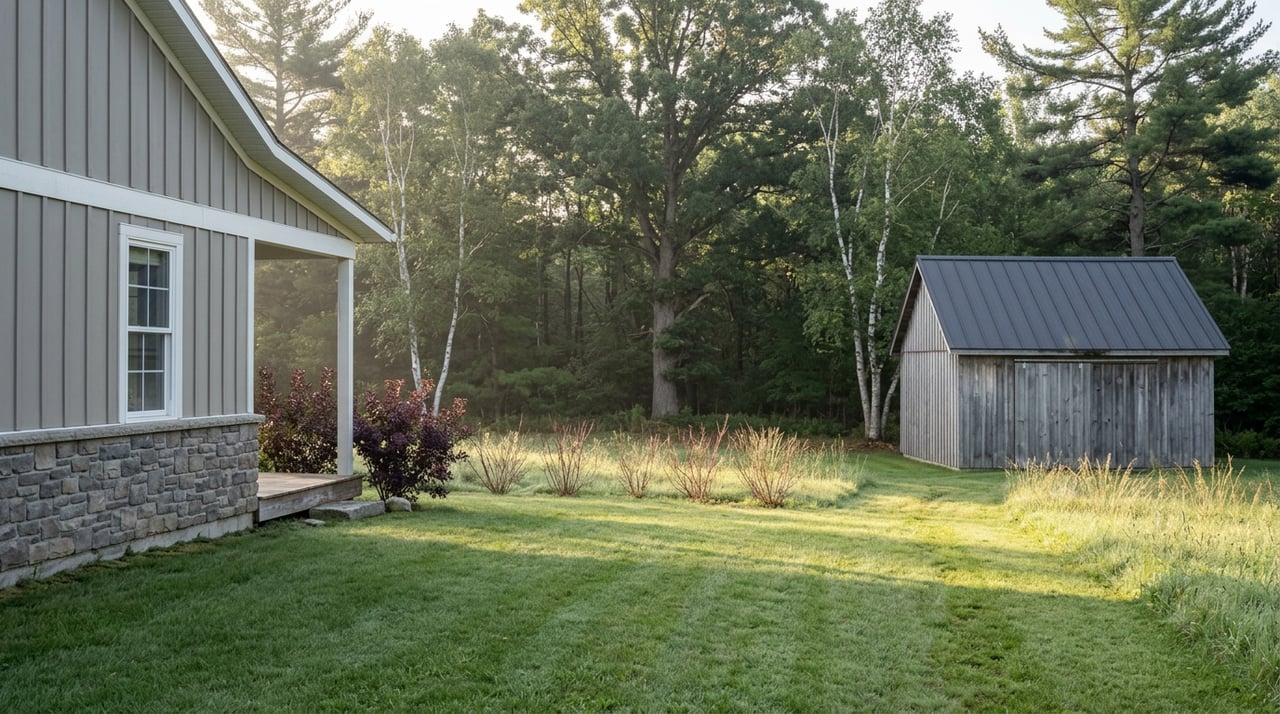
Drive through Nowthen on a Tuesday in July and you will pass two bars, one convenience store, a plant nursery, and not much else. That is by design. The city's own zoning holds most buildable lots to a five-acre average, and residents have made it clear over the years that they would rather keep the open space than get a shopping center. Then the third weekend of August arrives, and for three days a stretch of Old Viking Boulevard turns into something Nowthen has never built for itself: a working town square, complete with a general store, a school, a blacksmith shop, and a parade down the middle of it.
That is the Nowthen Threshing Show, and this year it runs August 14 through 16.
A show older than the city hosting it
Here is the detail that tends to surprise people who assume the show grew up alongside the town: the Threshing Show predates Nowthen as a legal city by 37 years. The event has been running since 1971, put on by what became the Nowthen Historical Power Association after two groups merged their collections and their labor. One group had restored a 22-inch International Harvester threshing machine and used it to run the original Rogers Threshing Show. The other had spent years collecting and restoring antique tractors and stationary gas engines. Nowthen itself did not exist as its own city until 2008, when it split off from the old Burns Township designation and took its name from a phrase the town's first postmaster, James Hare, apparently used constantly in conversation and in letters.
So the show is not a heritage event invented to give a young suburb some character. It is the older institution. The city grew up around it.
What is actually on the grounds
The NHPA's property is not a fairground that gets dressed up once a year and left empty the rest of the time. Walk the grounds and you will find a Fairbanks Morse diesel engine that starts on compressed air, a Worthington steam engine once used to create a vacuum in a hospital, and a cluster of buildings, a log house, a log barn, and a general store, that stay in place year round. The one-room school on the property was moved there and fully restored in 2010, and it still gets used during the show to explain what a rural classroom actually looked like a century ago. Working blacksmiths demonstrate metalworking on the grounds, and the antique tractor pull remains one of the largest single draws of the weekend.
None of this is static museum-piece stuff. The sawmill and shingle mill actually run. The steam engines actually start up on the hour. It is a difference that matters if you have only seen photos of the show and assumed it was a static display.
How the weekend actually breaks down
The show runs a slightly different rhythm depending on the day, and the difference tells you something about how the organizers think about their own event.
| Friday and Saturday | Sunday | |
|---|---|---|
| Gates and hours | Roughly 7 a.m. to 9 p.m. | 7 a.m. to 4 p.m. |
| Parade of Power | Afternoon, typically 1 p.m. | Afternoon, typically 1 p.m. |
| Evening programming | Live music and a tractor pull running into the evening | Grounds close after the afternoon pull |
| Tractor pull format | Multiple classes | Historic tractors only |
Friday and Saturday nights carry live music in the pavilion, with acts like Alan Godage and Sundown and Shirts & Skins on the schedule this year, plus a tractor pull that runs through several classes of machine. Sunday shifts to something quieter and more deliberate: a morning worship service, a tractor pull limited to historic tractors only, and a 4 p.m. close that gives the whole weekend a clear endpoint instead of just trailing off.
Getting a stock tractor into a pull is one thing. Getting a historic tractor onto the track and treating that as the weekend's closing statement is a different kind of choice, and it tells you the organizers care as much about preservation as they do about entertainment.
The town that never built a Main Street
Nowthen's own city government describes the community's commercial footprint plainly: two bars and restaurants, a pizza place, a convenience store, a couple of garden nurseries, a cabinet shop, and some auto repair shops, most of it strung along County Road 22. That is the entire retail base for a city of roughly 4,500 residents spread across 36 square miles. There is no downtown core, no strip of storefronts you would call a Main Street, because the town's own zoning and its residents' preferences steered development away from that model in favor of large lots and open land.
"The agriculture really makes it quaint and unique," Mayor Shane Hybben has said of the town.
That quaintness comes with a tradeoff. When you want the log-cabin general store experience, the working blacksmith shop, the sense of a shared civic space where everybody in town shows up at once, Nowthen does not have a permanent version of that to offer. It has the NHPA grounds, three days a year, doing double duty as both a historical exhibit and the closest thing the city has to a town square. For a weekend, the show becomes the infrastructure the town chose not to build.
Building a weekend around it
Most longtime residents do not treat the Threshing Show as an isolated Saturday outing. It sits inside a longer late-summer rhythm that includes a few other fixtures worth knowing if you have not lived through a full Nowthen summer yet.
- The Nowthen Farmers Market runs every Thursday from June through September in the parking lot at Bill's Superette, then moves indoors to the town hall once the weather turns. It is entirely volunteer-run, with baked goods, produce, and local crafters.
- Memorial Park recently had pickleball lines striped onto its existing basketball court, alongside the ball fields already in use for baseball, softball, and soccer.
- Twin Lakes Park offers a fishing pier, a swimming beach, a disc golf course, and walking trails, a short trip from most points in town.
- Northwoods Bar and Grill and Bootleggers Saloon and Eatery remain the two sit-down options in town, both closer to neighborhood taverns than destination restaurants, which is part of their appeal to people who live nearby.
The Threshing Show also has a quieter cousin about six weeks later. The Nowthen Heritage Festival lands on the fourth Saturday of September and leans more toward a family carnival than a working machine exhibit, with a pancake breakfast, food trucks, live music, fireworks at dusk, and an annual giant pumpkin contest that draws a local grower who reportedly holds a Guinness World Record. Between the two events, late summer and early fall in Nowthen has a real shape to it: one weekend built around machines and history in August, another built around fireworks and pumpkins in September.
What this tells you about the town
If you already live here, none of this is news exactly, but it is worth naming directly: Nowthen's identity was never going to come from a walkable downtown or a cluster of new restaurants. It comes from an all-volunteer historical association that has kept a working steam engine, a restored one-room school, and a functioning sawmill on one property since before the city itself had a name. That is a specific kind of civic infrastructure, and it is rare.
Nowthen's neighborhood page has more on the area if you are curious how the rest of the year looks, from the school districts families choose between to the parks residents use daily.
Amy Behning has spent years working the north metro corridor around Nowthen, Elk River, and St. Francis, and she is always glad to talk shop about what makes a place like this tick, whether that is the Threshing Show schedule or the market for acreage lots nearby. If you want to talk through what your Nowthen property is worth or just compare notes on the neighborhood, reach out to Amy Behning any time.