Looking for more space, privacy, and room to breathe in Isanti? Buying acreage or a country home can be a great move, but it also comes with details you do not usually face on a standard in-town lot. If you want to understand what to look for before you buy, this guide will walk you through the biggest issues that matter in Isanti so you can move forward with more confidence. Let’s dive in.
What makes an acreage property different in Isanti
In Isanti County, rural property rules can be very different from what you may be used to inside city limits. Outside incorporated city boundaries, the county zoning office handles zoning, floodplain review, wetlands, subdivision and platting, and septic oversight.
That means a parcel just outside the city of Isanti may look simple on paper but still have important limits on how it can be used. If a property is in the county’s Agriculture/Residential district, the goal is to support agricultural land use, reduce scattered non-farm development, and manage public-service costs.
For you as a buyer, the key point is simple: more land does not always mean more freedom. Rural properties often come with added layers of review related to access, wetlands, septic placement, and future building plans.
Why usable acreage matters
One of the biggest mistakes buyers make is focusing only on total parcel size. In Isanti County, a property may be advertised with several acres, but not all of that land may be practical for a home site, driveway, septic area, or outbuildings.
Recent county planning examples show that wetlands, soil conditions, and access issues can reduce the buildable area. So when you are comparing country homes in Isanti, it helps to look beyond the tax parcel size and ask how much of the site is actually usable.
In several 2025 county planning cases involving Agriculture/Residential plats, examples repeatedly referenced a minimum lot size of 2.5 acres, 150 feet of lot width, 200 feet of lot depth, and four parcels per quarter-quarter section. That does not guarantee every parcel will fit that pattern, but it gives you a useful local benchmark.
Outbuildings are common, but still regulated
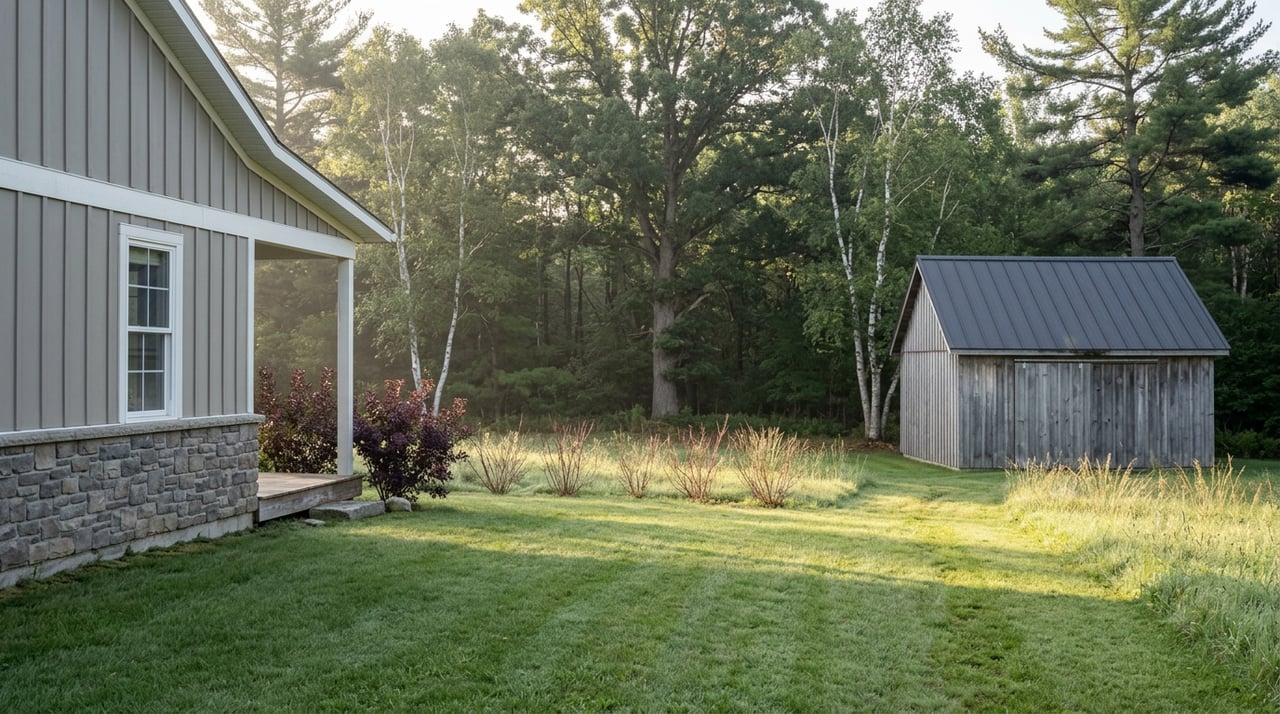
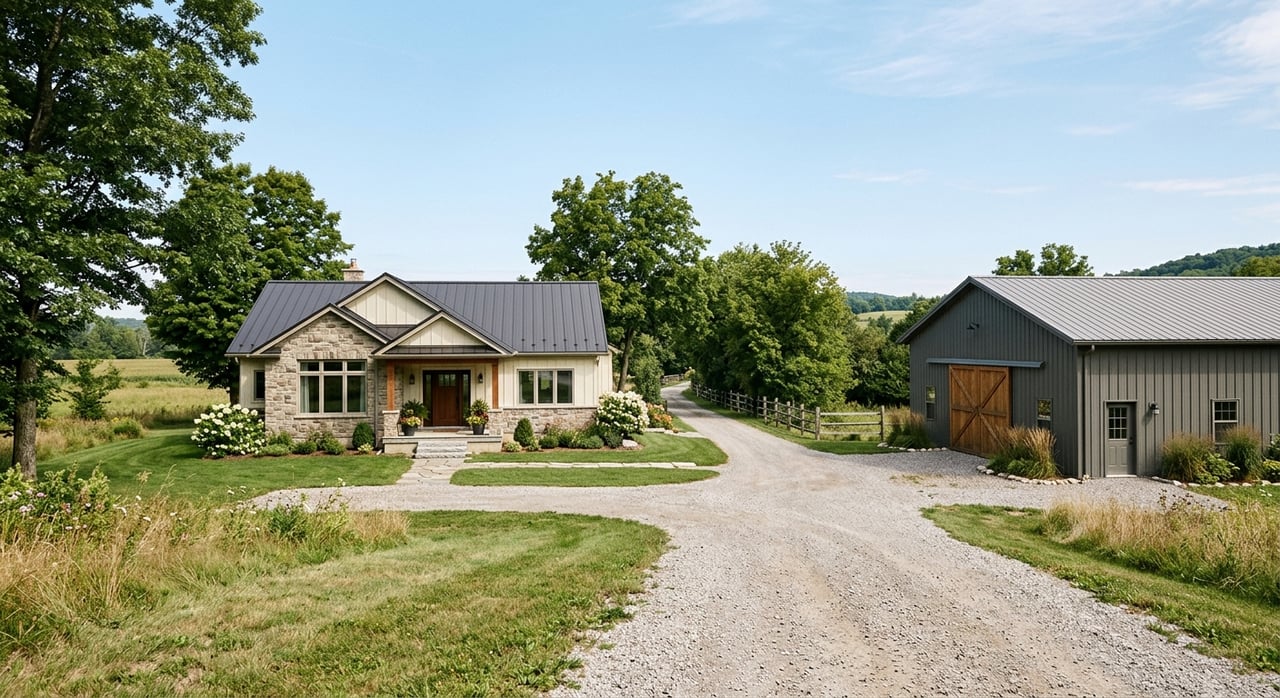
A lot of buyers looking at country homes want space for a detached garage, pole building, shed, or workshop. That is very common in rural Isanti, and the county’s permit forms reflect that by separately listing permits and information for garages, pole buildings, garden or storage sheds, driveways, septic applications, and setbacks.
The main takeaway is that a large lot does not mean you can place an outbuilding anywhere you want. Accessory structures still need to meet setback rules, and in some cases a formal variance may be required if you want to build too close to the road right-of-way.
If your must-have list includes a shop, barn, RV storage building, or extra garage space, make sure you verify placement options early. It is much easier to confirm that before you buy than after you move in.
Access and driveways can shape the whole property
On rural property, the driveway is not just a detail. It can affect where you build, how you use the land, and whether a parcel works well year-round.
In Isanti County, new private access drives require a permit from the local road authority. The county ordinance also lays out different standards depending on how many parcels a private drive serves.
For example:
- A drive serving one parcel requires a 33-foot easement and a 12-foot driving surface
- A drive serving two parcels requires a 66-foot easement and a 24-foot driving surface
- Class 5 gravel and a turn-around are required in those examples
- Township road standards may also apply if the township has adopted its own rules
Recent county planning cases also showed that some new lots were limited to existing field entrances or existing driveways instead of allowing a brand-new access point on a county road. That is a good reminder that road access should always be part of your early due diligence.
Wells and water quality are part of ownership
Many country homes in Isanti rely on private wells instead of municipal water. That gives you independence, but it also means you are responsible for the system and the safety of your drinking water.
Minnesota does not require private-well water testing at the time of transfer, although lenders often do. The Minnesota Department of Health recommends testing nitrate every year, coliform bacteria every year, and arsenic at least once.
University of Minnesota Extension also recommends testing after flooding or heavy rains and checking for visible damage around the well cap. So if you are buying a country home, it is smart to think of the well as an ongoing part of home maintenance, not just a box to check during closing.
Septic matters more than many buyers expect
If there is one system you do not want to overlook on a country property, it is septic. In Isanti County, a property with a dwelling or on-site sewage treatment system must have a Point of Sale Certificate of Compliance before it is sold.
That inspection must be completed on approved forms by a licensed MPCA inspector. Even so, the county notes that an existing-system certificate is not a warranty of future performance.
The MPCA also explains that a compliance inspection is only a snapshot. It does not evaluate every factor, such as system lifespan, sizing, usage, past abuse, or all setback issues.
For ongoing maintenance, the county ordinance states that systems not under a management plan must have tanks inspected and solids removed every three years. That makes septic history, inspection timing, and maintenance records especially important when you are reviewing a rural property.
Smart due diligence before you make an offer
When you are buying acreage, due diligence needs to go deeper than the house itself. A strong first step is a survey-based site review.
University of Minnesota Extension recommends starting with the legal description, property lines, and exact lot dimensions. If possible, an existing-conditions survey can help show boundaries, contours, roads and driveways, wells, possible building sites, septic areas, wetlands, drainage, and utilities.
This matters because on acreage, all the pieces connect. The best location for the house may affect where the driveway goes, which affects where septic can go, which may affect where future outbuildings can fit.
Questions to ask before you buy
Here are some practical questions to raise when you are considering a country home in Isanti:
- Where are the exact property lines?
- How much of the land is actually buildable or usable?
- Are there wetlands, floodplain issues, or shoreland restrictions?
- Where is the current septic system located, and what is its compliance status?
- Where is the well, and when was the water last tested?
- Is the current driveway conforming, and will future access changes require approval?
- Are there setback limits that could affect future sheds, garages, or barns?
- If you want animals or hobby-farm use, what county setback rules apply?
These questions can save you time, money, and frustration later.
Shoreland and wet areas need extra review
If the property is near a lake, stream, or wetland area, you should expect another layer of review. In Isanti County, shoreland parcels can have separate structure and septic setbacks.
The county also requires septic inspections on lakes and streams at point of sale and when a building permit is requested. That can affect your future plans even if the home itself seems move-in ready today.
For example, if you hope to add a shed, build an addition, or remodel later, shoreland rules may shape what is possible. This is one area where local review early in the process can make a big difference.
Planning for horses or hobby-farm use
Some buyers are drawn to Isanti country homes because they want room for horses, small-scale agriculture, or a more flexible rural lifestyle. The county’s Agriculture/Residential district does allow agriculture, livestock, horses, and other farm production.
At the same time, those uses still come with limits. The county ordinance lists feedlot or manure-storage areas at a minimum of 500 feet from any existing non-farm dwelling, along with 250-foot side and rear yard setbacks.
So if you are dreaming about more than just a house and yard, it is worth confirming exactly how the property can support your plans. Rural living can offer more options, but it still requires careful review.
What to remember when buying acreage in Isanti
Country homes in Isanti can offer privacy, versatility, and a lot of value for buyers who want more space. But the smartest purchase is not always the parcel with the most acres. It is the one that fits how you actually want to live and has the access, systems, and usable land to support that.
If you stay focused on zoning, access, septic, wells, wetlands, and future building plans, you can make a much more informed decision. A little extra homework up front can help you avoid expensive surprises after closing.
If you are thinking about buying acreage or a country home in Isanti, working with someone who understands the practical side of rural property can make the process a whole lot smoother. When you are ready to talk through your goals, connect with Amy Behning for local, hands-on guidance.
FAQs
What should you check first when buying acreage in Isanti?
- Start with property lines, zoning, usable acreage, access, well information, and septic compliance before focusing on future plans for the land.
Does a larger parcel in Isanti always mean more buildable space?
- No. Wetlands, access limits, soil conditions, and setback rules can reduce how much of the total acreage is actually usable.
Are septic inspections required for country homes in Isanti?
- Yes. Isanti County requires a Point of Sale Certificate of Compliance before a property with a dwelling or on-site sewage treatment system is sold.
Can you build a pole barn or shed anywhere on an acreage property in Isanti?
- No. Accessory structures still need to meet county setback rules, and some locations may require a variance.
Do country homes in Isanti usually have private wells?
- Many do, and that means you are responsible for maintenance and water testing rather than relying on municipal water service.
What if an Isanti acreage property is near water?
- Shoreland properties may have added structure and septic setbacks, and those rules can affect current use and future improvements.